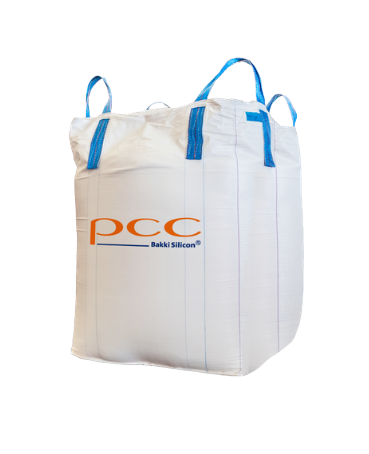

Microsilica is a by-product of silicon metal production. This is a densified amorphous powder, obtained by the metallurgical process of silicon in an electrical arc furnace. It is used as an additive to improve the properties of concrete and mortar formulations.
Markets and applications
Building & Construction / Building ceramics, Concrete & mortar additives, Plasterboards & gypsum additives
Function
Additives for ceramics
Additives for tight concrete
Additives to increase the strength of concrete
Additives to reduce the absorbability of concrete
Raw materials & intermediates
Composition
Silicon
Segment
Chloralkali, raw materials and intermediates
Specialty Products / Specialty additives
Microsilica, also known as silica matter (CAS number 69012-64-2), is a fine-grained dusty substance derived from the production of ferrosilicon and metallic silicon in high-temperature electric arc furnaces. In industry, it is used as a mineral additive. It is commonly used in the construction industry as one of the main additives for concrete, mortar and cement-based products. It is thanks to the use of microsilica that the largest concrete structures in the world have been built.
Microsilica and silica matter are terms used interchangeably in the literature and industry. These terms are used to describe silicon dioxide (SiO2), an amorphous polymorph which additionally contains small amounts of other oxides - in particular, aluminium, calcium or iron oxides. Microsilica comes in the form of a white, grey or nearly black powder. Microsilica particles are amorphous spheres with a diameter between 0.1 to 0.2 μm, which makes it approximately 100 times smaller than the average cement particle. At high temperatures of up to 2,000ᵒC, microsilica exhibits exceptional durability. It should be kept in mind that silica matter is insoluble in both water and organic solvents. The specific surface area of microsilica ranges from 15 to 30 m2/g.
There are two types of microsilica: compacted or densified. These two forms differ in bulk density, which is very important parameter that characterises microsilica. Bulk density is defined as ‘the mass of the loosely sprinkled material divided by the total volume they occupy, considering the volume of the voids between particles’. The bulk density of compacted silica matter can range from 180 to 350 kg/m3, whereas the bulk density of densified silica matter can range from 450 to 650 kg/m3.
Silica matter is a by-product in the production of silicon and ferrosilicon alloys in an electric arc furnace. These alloys are made of high-purity quartz and carbon. It is also collected as a by-product in the production of other silicon alloys such as ferrochromium, ferromanganese, ferromagnesium and calcium silicon. The raw materials usually used in smelting are metallurgical quartz, coke, wood chips and coal. They are delivered directly into the furnace with filling tubes that rotate. The process of obtaining pure silicon takes place there at a temperature of over 2,000ᵒC. The key to obtaining silica dust is to filter the gases emitted from the furnaces, as this is where it is found.
Also, the PCC Group offers silica matter (CAS 69012-64-2). Sales of this important component in the construction industry are constantly growing. The producer of microsilica for the PCC Group, PCC BakkiSilicon hf., is located in Iceland. It is one of the most environmentally and climate-friendly production plants. The use of natural energy sources such as geothermal resources reduces greenhouse gas emissions by about two-thirds compared to other plants around the world. Microsilica produced by the PCC Group has a very low carbon footprint compared to the products generally available on the market. This effect is possible to obtain thanks to the use of the most modern ferrosilicon production line in the world.

Figure 1. A comparison of the carbon footprint of microsilica produced by PCC BakkiSilikon hf. with other analogous products available on the market.
In recent years, the addition of silica matter to concrete products has been gaining popularity. The basic, physical mechanism of action of microsilica is sealing the microstructure of concrete. Silica matter with a highly fragmented structure fills the spaces between the cement grains, as is the case with sand sealing coarse aggregate. The silica in the spaces begins to react in a pozzolanic reaction (the CSH phase begins to form).
It turns out that if we replace 15% of cement with microsilica, the airtightness of the concrete will increase several dozen times. Such an effect is extremely difficult to achieve with the use of other methods. For this reason, microsilica is an essential component of the mixture when designing high-performance concretes.
The characteristic feature of microsilica, which is small grain size, favours denser packing of concrete components. As a component of concrete, silica matter is often used in its original form (i.e., as it is collected by filters during the production of ferro-silicon alloys). The compacted form (created by subjecting microsilica to appropriate treatments) as well as silica of paste-like consistency are also becoming more and more popular. Due to the large specific surface characterising silica matter, the use of this type of mineral additives causes that the water intended for the production of concrete is adsorbed on the microsilica grains - which contributes to the stability of the resulting concrete mix. As a result, there is a reduction in the fluidity of the mixture. In order to maintain the proper consistency of concrete containing microsilica, it is also necessary to use superplasticisers.
It is important to maintain the correct ratio of water, cement and microsilica. The price of the obtained concrete increases depending on the amount of silica matter added, but too much of it has a negative effect on the final product. In this situation, choosing the right proportions is crucial. The most advantageous content of microsilica, both in terms of the properties of the finished product as well as in terms of costs, is in the range of 5-10%.
Microsilica produced by PCC BakkiSilicon meets all the requirements imposed on it in accordance with the applicable PN-EN-13263-1 standard. SiO2 content ranges from 80% to 95%, Al2O3 to 0.3%, C to 1.8% , CaO to 0.7%, Fe2O3 to 0.1%, K2O to 0.4%, MgO to 0.2% and Na2O to maximum content of 0.1%.
Improving the mechanical properties
Silica matter has the ability to fill spaces between the remaining concrete components, creating a crystalline phase in the hardened concrete (through a pozzolanic reaction). As a result, concrete with the addition of microsilica is more airtight. It is related to the rupture of the capillaries in the concrete and, at the same time, the disturbance of its capillary porosity. This process significantly improves the mechanical parameters of concrete (e.g., compressive strength).
Increasing the adhesion of the grout to the aggregate grains
The addition of microsilica increases the adhesion and reduces the porosity of the aggregate-grout contact zone. As a result of physical and chemical interactions, the microstructure of the grout is favourably modified. At the same time, the porosity in the area of the capillary pores is significantly reduced. Changing the pore structure is considered to be the main factor influencing features such as airtightness and durability.
Resistance to aggressive chemicals
Increasing the airtightness of concrete directly leads to improved resistance to chemical corrosion. It is much more difficult for aggressive environmental substances to penetrate into the concrete structure. Silica matter reduces the risk associated with, for example, the destructive effects of sulphate-rich waters, and the reason for their durability can be given a relatively lower content of calcium hydroxide in combination with its packed, airtight structure.
Reinforcement protection
The reduced permeability of microsilica provides protection against the penetration of chloride ions by extending the time for chloride ions to reach the steel rod and cause corrosion. In addition, microsilicate concrete has much higher electrical resistance and, thus, slows down the corrosion rate. This combined effect increases the service life of the structure by five to ten times.
Abrasion resistance
The abrasion resistance of concrete with the addition of microsilica is very high. Its use in land and road construction saves time and money. The resistance of concrete to hydraulic abrasion is also improved, which makes it perfect for the construction of dams.
Microsilica is not only used as an additive to concretes - primarily high-performance concretes and special composite building materials - but is also used in a wide range of products and applications. Among its uses are:
White microsilica, the raw material, is also worth mentioning. In its composition, in addition to about 95% of silicon dioxide and other oxides, it also contains zirconium oxide with a content of up to 3%. This product is characterised by a fine grain which makes it highly reactive. It is mainly used as an additive to refractory materials, improving their rheological properties and extending their service-life.
Undoubtedly, silica matter plays a significant role in the production of concrete. The construction industry is, therefore, the main industry in which it is used, and it also regulates aspects such as demand and price. Portal MarketsandMarkets™ states that in 2015-2020, there was an increase in the market value of microsilica to USD 563.09 million annually. In recent years, the global market has shown a clear increase. The sale of this raw material is growing because it ensures high corrosion resistance, high strength and the durability of the products.
Silica matter is in great demand in the Middle East and Africa and the Asia-Pacific region as it is used in the construction of metro lines, tunnels and skyscrapers. There is increased demand for the products manufactured by distributors and producers of microsilica. Countries such as the United Arab Emirates and Saudi Arabia are market leaders in the Middle East and Africa, with the United Arab Emirates already having the largest share of microsilica consumption. In Europe, sales of microsilica are relatively low. The estimated market and price growth of silica matter is greatest in the Asia-Pacific region and, then, in the Middle East.